In this guide
Trastevere is easiest to enjoy when the walk has a few clear landmarks and enough space between them for the streets themselves. This suggested half-day route begins at Ponte Sisto, continues through Piazza Trilussa to Santa Maria in Trastevere and offers two optional directions: early-start Renaissance art to the north, or Santa Cecilia to the south.
It is a practical neighbourhood guide for someone who wants more than a list of photogenic corners, without filling every hour. Use the named stops to plot a flexible version that fits your starting point, interests and mobility.
Basic route: Ponte Sisto → Piazza Trilussa → streets around Via della Scala and Via del Moro → Piazza Santa Maria in Trastevere. Add Santa Cecilia if you want a longer walk. Villa Farnesina needs an early-start plan because its ordinary schedule ends at 2pm.
1. Cross Ponte Sisto and begin at Piazza Trilussa
If you are coming from the historic centre, Ponte Sisto is a useful arrival point. Crossing the river provides a clear beginning to the neighbourhood outing instead of starting with a collection of unrelated saved pins. On the Trastevere side, Piazza Trilussa gives you somewhere easy to identify and meet.
Pause to look at the square before deciding where to go next. It is a public gathering place, not a quiet scene guaranteed by the time of day. If the area feels busy, you can move on into the smaller streets rather than wait for it to resemble an empty photograph.
For a straightforward food possibility, Trapizzino at Piazza Trilussa 46 is a named option with its own menu and location page. It serves trapizzini and supplì, with a wine-focused setting. Check the current menu and seating arrangements when choosing whether it suits your break.
2. Give the small streets one loose direction
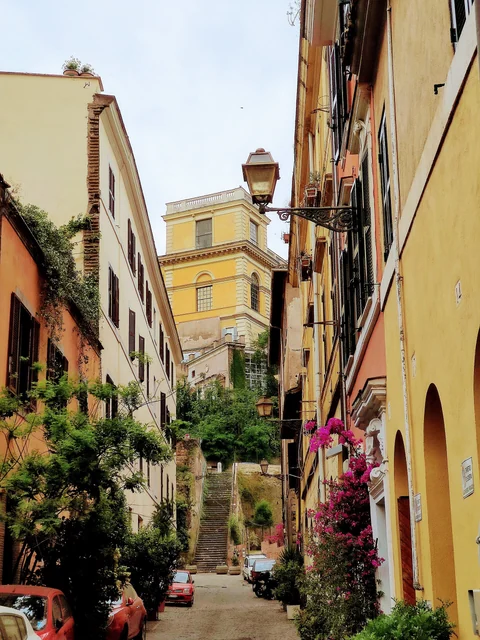
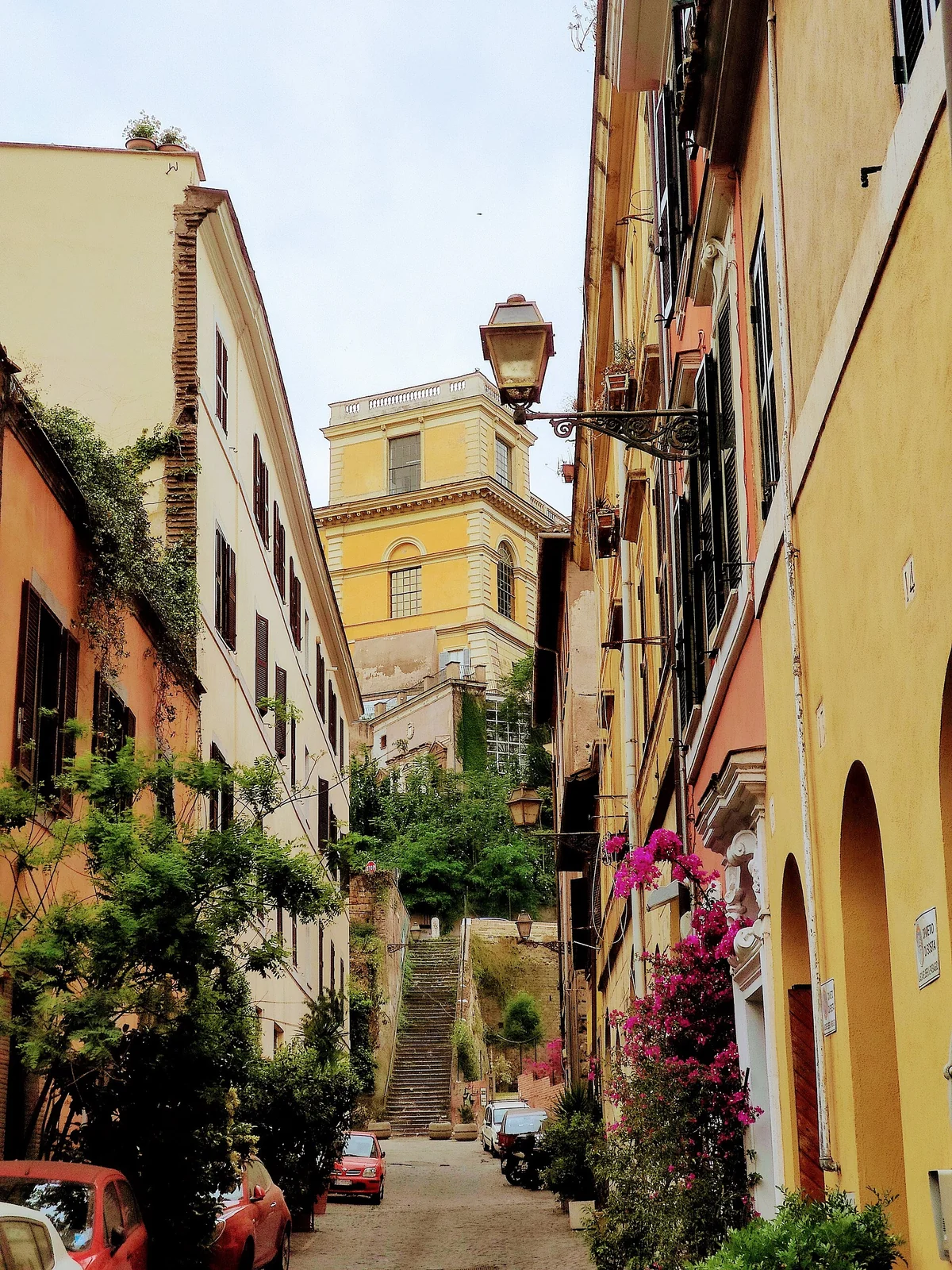
From the square, use Via del Moro and the area towards Via della Scala as streets to explore on the way to Santa Maria. You do not need to take every turn or follow a supposedly secret lane. A shop window, a doorway or the contrast between a narrow street and the next square can be the interest.
Keep the route easy to shorten. Cobblestones, traffic and steps deserve more attention than a flat map suggests. If smooth surfaces or step-free access are essential, check the specific route rather than assume the whole district shares the same conditions.
This is also a good part of the walk to put the camera away for a little while. Trastevere is somewhere people live and work. Respect doorways, residents and businesses, and do not treat private entrances as props for a photograph.
3. Look up at Santa Maria in Trastevere
Piazza Santa Maria in Trastevere is the natural heart of this version of the outing. The basilica gives the stop a particular subject: its medieval mosaic decoration and its much older layers of history. Inside, the gold of the apse and the sequence of columns offer something to look at even if you know very little about church art.
The official tourism description identifies Pietro Cavallini's mosaics among its important works. You can enjoy this as a short, focused visit instead of trying to decode every figure. Choose one detail to look at closely, then let the rest provide the setting.
Services and religious use come first. Check current visitor conditions, dress appropriately and keep the visit quiet. If the church is unavailable, the square can remain the anchor; the whole afternoon need not depend on entering every building.
4. Choose the early-start art extension
If Renaissance painting is a particular interest, put Villa Farnesina before the central part of the walk. The villa on Via della Lungara 230 has painted interiors by Raphael and his workshop. Two names to look for are the Loggia of Cupid and Psyche and the Loggia of Galatea.
In the Cupid and Psyche loggia, the painted vault turns into a richly decorated pergola. Look for the fruit and flowers framing the mythological scenes: the garden seems to continue overhead. It gives the outing a very different mood from the basilica’s gold mosaics. Here the stories are classical mythology, with a sense of celebration built into the room. You can enjoy that change of atmosphere without needing to identify every god.
Its official ordinary hours, checked on 2 November 2026, are Monday to Saturday 9am–2pm, with last admission 1:15pm. A special opening is advertised for the second Sunday of the month. That early finish is the key planning detail: Villa Farnesina is not something to save until after a long lunch.
The official full ticket is currently €12; check the applicable ticket category and any special arrangements for your date. An app or another service may have a separate charge. If you prefer plants to frescoes, the nearby Botanical Garden is another ticketed interest to research, with its own seasonal visitor information.
I would choose the villa or the garden for a half-day outing, rather than automatically adding both. The rest of Trastevere is much easier to enjoy when a cultural visit has not already used all the time.
5. Or walk south to Santa Cecilia
For a longer neighbourhood walk, continue towards Santa Cecilia in Trastevere, at Piazza di Santa Cecilia 22. This takes the outing away from simply circling the busiest central square and gives it another clear cultural stop.
The basilica is known for Stefano Maderno's sculpture of the saint and for its layered decoration. Its courtyard provides a different approach from a church entered straight off a busy street. Some parts of the complex, including the Cavallini frescoes and underground areas, have separate visiting arrangements; do not treat the main church's opening as access to everything.
It is a particularly good extension if you enjoy looking at a few things carefully. If your interest is more in food and conversation, you may prefer to stay around the central streets and leave the southern part for another visit.
Where to put lunch or a drink
For an independent day, choose the meal when you know how much time and energy remain. Read a current menu, including drinks and any service arrangements, before settling in. A famous district does not give every restaurant the same character or price.
If you want the eating to be the main purpose, consider a guided food walk instead of an independent wander. A tour and this route solve different problems: the tour supplies a sequence and introductions, while the independent version leaves the pace with you.
How to finish without crossing Rome again
End near the part of the district that suits your onward journey. You can return towards Ponte Sisto, continue towards Tiber Island if that fits your route, or make a deliberate transport plan from your actual finish. Do not rely on an assumed tram or bus without checking current service information.
The short version can end at Santa Maria; the longer version can include Santa Cecilia. Both count as a complete outing. The point is to have enough structure to stop navigating constantly, while keeping the afternoon loose enough for a place you want to stay.
Sources
Official visitor and operator information checked 2 November 2026. Routes and looking activities are our planning suggestions; check dated admission and session details before booking.
Sources & practical updates
Researched 2 November 2026. Public prices and schedules are dated snapshots. The exact booking, itinerary and access needs determine the final details.
These guides combine independent research and original planning advice. We have not personally attended the listed experiences; illustrative routes and projects are identified in the text.