In this guide
There is a lovely kind of Roman day that begins with something enormous and gradually becomes smaller: a dome, a painting, a fountain, then a table in the shade. The Pantheon is a particularly good starting point. You can give it your full attention, then spend the rest of the day on foot between nearby churches, squares and streets instead of racing across the city for a second headline attraction.
This suggested route connects the Pantheon, San Luigi dei Francesi and Piazza Navona, with two different ways to continue. It suits a first visit, an art-minded return trip or anyone who wants one substantial sight without a day made entirely of reservations. Meals, queues and how long you look will shape the afternoon; the route leaves room for all three.
Begin with the Pantheon—and know which ticket you are buying
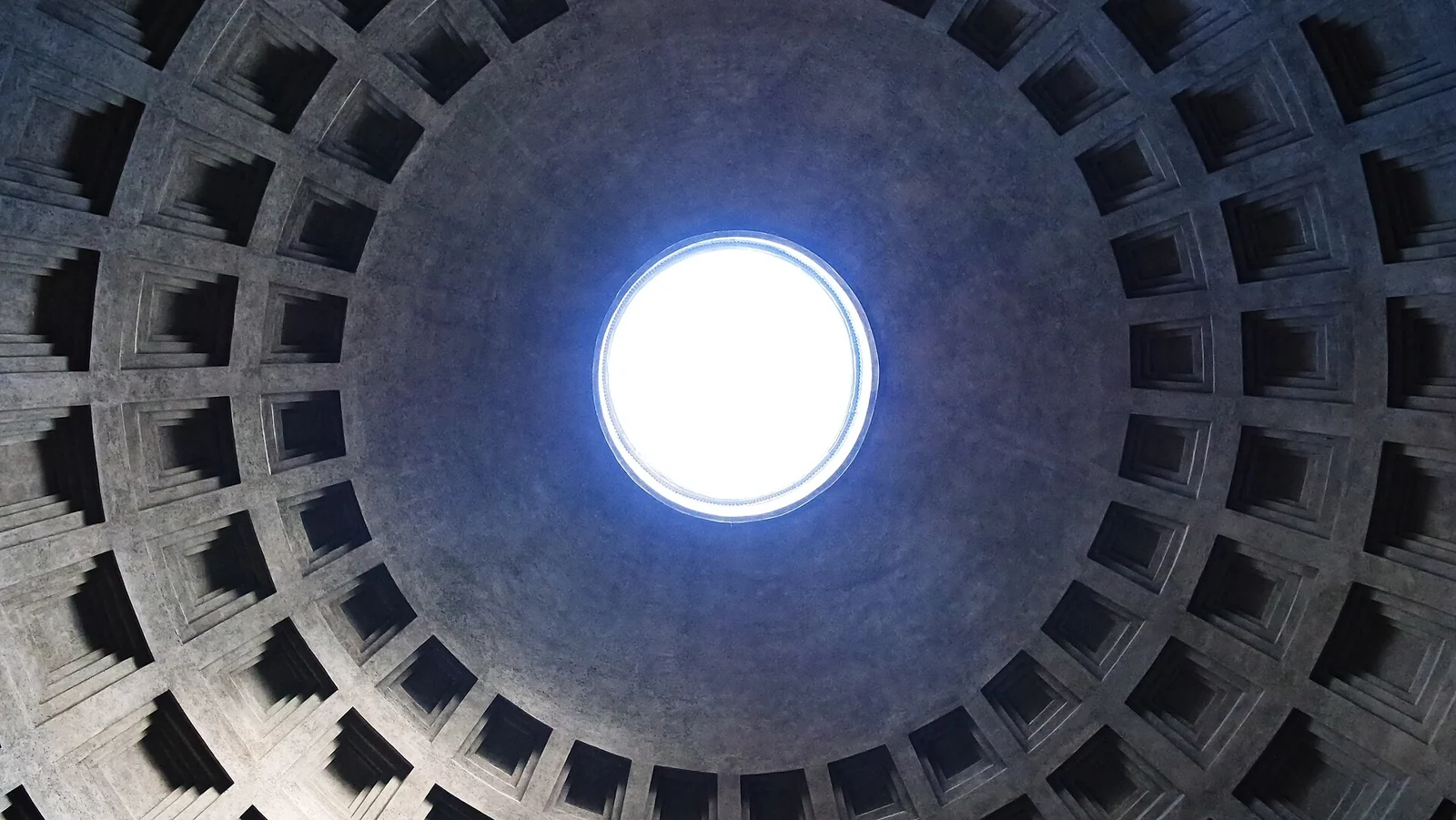
The exterior gives you columns, an inscription and the bustle of Piazza della Rotonda. Inside, the reason to slow down is above your head: the dome and its open eye of sky. Resist the urge to treat the room as a quick photograph. Follow the changing light, look at the relationship between the circular interior and the entrance, and then return to the middle for another look. The building rewards a little patience even if architectural dates are not your holiday hobby.
The Ministry of Culture lists the ordinary full admission price as €7 from 1 July 2026. Reduced and free categories have their own conditions. Buy through the official Musei Italiani channel linked by the Ministry, or follow the official on-site arrangements. The same source explicitly says there is no official skip-the-line admission option: access follows arrival order. A reseller's package can include something useful, such as a guide, but the word “priority” deserves careful reading.
The published ordinary visiting window is 9am–7pm, with last entry at 6:30pm; liturgical use can affect access. Check your actual date before building lunch around it. This is still a church, so choose clothing suitable for entering a place of worship and leave enough space in the schedule for the entry process. An online ticket does not remove the need to arrive.
Outside, take a moment to step away from the doorway before deciding what comes next. A few minutes looking back at the portico can be more satisfying than immediately opening the next booking confirmation. The Pantheon can remain the day's main event; everything after it is a choice.
Walk to a church with three remarkable paintings
Continue towards San Luigi dei Francesi, Piazza San Luigi de' Francesi 5. Rome's tourism office identifies three paintings by Caravaggio in the Contarelli Chapel, at the end of the left aisle: the Calling, the Inspiration and the Martyrdom of Saint Matthew. These are specific reasons to enter, rather than another church added because it happens to be close.
Try looking at the Calling before reading a long interpretation. Who seems to notice the arrival, where does the light lead, and which gesture catches your attention first? You do not need to turn an encounter with a painting into an examination. The dramatic light and the figures' responses can carry the visit, with the labels or a good guide adding context afterwards.
A short church visit also changes the rhythm of the day. You have moved from the Pantheon's great shared space to the concentration of a side chapel. Allow other people a view, keep voices low and follow any directions in the church. Worship and visiting have to coexist; do not make a paid timed activity depend on gaining immediate access to the paintings.
Let Piazza Navona be a pause, not another task
Piazza Navona is the natural next chapter. Its long shape follows the site of the Stadium of Domitian, which makes the space easier to understand than thinking of it as simply a pretty rectangle of cafés. The Fountain of the Four Rivers gives you another major Roman work to look at without entering a museum.
Walk towards one end before returning through the middle. That small change of viewpoint helps you notice the square as a place: fountains against façades, open sky above the churches, people stopping and moving again. For children, the outline of an ancient stadium can be a more engaging starting point than a list of sculptors. For photographers, keep the whole space in mind as well as the central fountain.
This is a sensible place to decide how much day remains. You have already seen a landmark, major paintings and one of Rome's best-known squares. A long lunch now is a complete plan. If you sit at a café on the square, read the menu and any service information before ordering; choose the setting knowingly rather than assuming a central table will cost the same as a counter stop elsewhere.
Choose one afternoon: Palazzo Altemps or Campo de' Fiori
For sculpture or uncertain weather, choose Palazzo Altemps. The National Roman Museum's Renaissance palace at Piazza Sant'Apollinare 46 places ancient sculpture within an aristocratic collecting setting. This is a different experience from a huge archaeological circuit: the rooms and the palace are part of what you are looking at. It fits particularly well after the public scale of the Pantheon and Piazza Navona.
Make it a real museum visit rather than a doorway on the way to somewhere else. Look at the official ticket arrangements, any exhibition supplements and the current hours first. Use the National Roman Museum’s current visitor information when choosing an arrival, and check the day’s notices as well as the regular timetable. If you are already full of art, save the palace for a rainy day; good proximity does not create unlimited attention.
For an outdoor afternoon, continue towards Campo de' Fiori and Via Giulia. Campo de' Fiori changes character between its daytime market setting and later social hours. Come for that contrast and the square itself, rather than expecting every stall to be open whenever you arrive. From there, Via Giulia offers a more linear stretch of streetscape than another large piazza.
This option works well when you want to keep discovering Rome without buying another admission. Choose a street to follow, stop when something interests you, and leave the shopping unforced. A browse that ends with nothing in your bag can still be a very good hour.
A workable shape for the day
- Morning: your confirmed Pantheon visit, then San Luigi dei Francesi if visitor access allows.
- Midday: Piazza Navona and a proper meal. Keep this interval free of another reservation.
- Afternoon: Palazzo Altemps for sculpture, or Campo de' Fiori and Via Giulia for an outdoor continuation.
- Finish: return from the part of the centre where you actually end up, rather than retracing every stop.
Budget the Pantheon admission, food and any optional museum separately. The squares and the street route do not require a tour purchase. If you want someone to interpret the art and architecture, compare the content of a guided tour with this independent outline; paying for explanation is a different decision from paying because a place is famous.
Bring shoes you are happy to stand in as well as walk in. If steps, standing or toilets are important considerations, check the individual venues before committing: a short distance on a map says little about the interior of a historic building. In hot weather, move the optional outdoor stretch later and give lunch more time; in rain, the indoor Rome guide offers alternatives.
For a different day, with something to make rather than another monument to see, browse the Rome pasta and mosaic collection. There is no prize for fitting both kinds of day into one. The pleasure of this route is its scale: one celebrated building, a few powerful details and enough room left to enjoy being in Rome.
Sources
Official visitor and operator information checked 2 November 2026. Routes and looking activities are our planning suggestions; check dated admission and session details before booking.
Sources & practical updates
Researched 2 November 2026. Public prices and schedules are dated snapshots. The exact booking, itinerary and access needs determine the final details.
These guides combine independent research and original planning advice. We have not personally attended the listed experiences; illustrative routes and projects are identified in the text.