In this guide
- 1. Explora: a museum designed for doing
- 2. Villa Borghese: a day with room to move
- 3. Welcome To Rome: turn a jumble of ruins into a story
- 4. Centrale Montemartini: engines beside ancient statues
- 5. Make a mosaic—or start with a looking game
- 6. Turn Trastevere into a small discovery walk
- Build one day, not a collection of promises
- Sources
Rome gives children plenty to look at. Sometimes what they really want is something to do: operate a pretend shop, work out how a machine moves, place a piece in a pattern or decide which path to take in a park. A family day becomes easier when that wish has a real place in the plan.
This guide offers six specific starting points, from a hands-on children's museum to ancient mosaics and an open-air afternoon. They suit different ages and interests; they are not six stops for a single day. Choose one main activity, keep food and a break close by, and let the adults' sightseeing fit around something the child can genuinely enjoy.
1. Explora: a museum designed for doing
Explora, Via Flaminia 82, is a children's museum aimed at ages 0–11. Its appeal is practical and interactive, with spaces that invite children to explore rather than follow a conventional guided tour. Rome's tourism office describes themes including a market, creativity and the environment. This is the option to examine first if your child has had enough of being asked to keep still.
Visits run in timed sessions of one hour and 45 minutes. The museum currently lists Tuesday–Sunday sessions at 10am, noon, 3pm and 5pm, and closes on Mondays. Check the live calendar for your date. A timed start is helpful for planning lunch, but build in the arrival process rather than reaching the door at the exact moment the session begins.
Adults and children visit together: adults need to accompany children, and adults cannot simply enter without a child. At the checked standard price, admission is €12 for adults and for children aged three and over, with separate younger-child categories. That means a family of two adults and two children aged three or above would start at €48 for admission, before food or transport. Confirm the applicable categories at checkout.
Booking is required at weekends and holidays and recommended on weekdays. Give the session room to be the main event. Adding a rushed major monument immediately afterwards can undo the point of choosing a place where children can follow their own curiosity.
2. Villa Borghese: a day with room to move
For a largely outdoor day, Villa Borghese gives the family a different sort of freedom. The official tourism description includes gardens, fountains, sculpture and the small lake with its Temple of Aesculapius. The public park's ordinary access is from dawn to dusk; specific attractions within it have separate arrangements.
Make a simple expedition instead of announcing “a long walk.” Choose the lake as a destination, ask the children to find three different animal shapes in decoration or sculpture, or let them select a place to stop and draw. These are suggested games, not activities run by the park. A tiny notebook can be more useful here than another list of facts to remember.
Explora and the Piazza del Popolo side of the park make a sensible area to consider for the same day. They are separate sites, however, and the climb into the park can matter to tired legs or a pushchair. Decide which entrance and onward journey suit your family before setting out.
If boat rental or another paid attraction is central to your plan, check that operator's current availability. Do not promise a boat ride on the basis of a general park description. The park itself can still provide the afternoon: a path, a snack and space to choose the next small destination.
3. Welcome To Rome: turn a jumble of ruins into a story
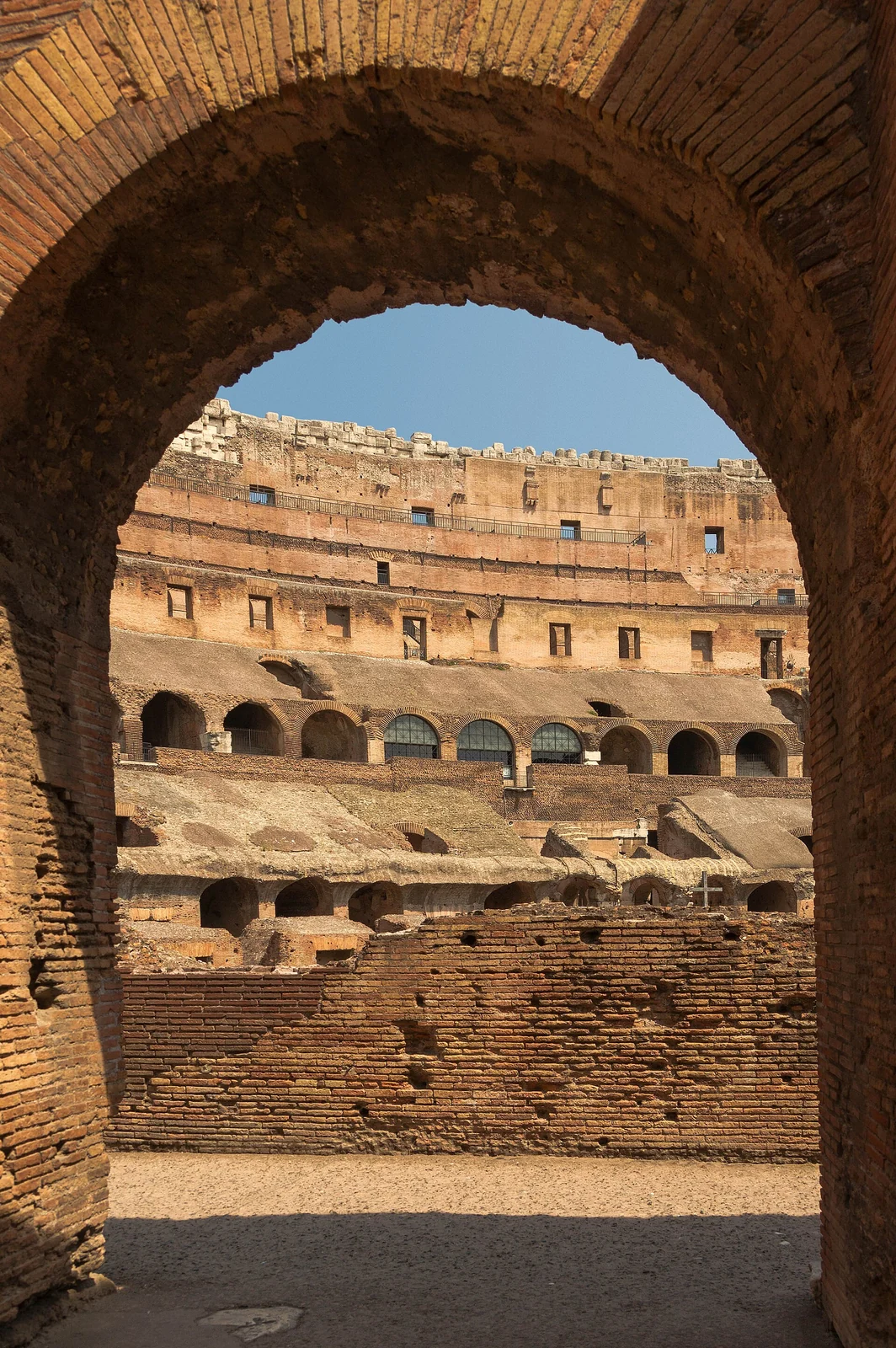
Welcome To Rome uses a multimedia projection and interactive models in the former Cinema Augustus on Corso Vittorio Emanuele II. It can help a child who enjoys visual stories understand the changing city before another day of temples, churches and ruins.
The main film runs for about 27 minutes. That is a useful distinction for families: it tells you the length of the principal projection, rather than promising a complete 27-minute visit. Allow for the other displays and arrival. Check the language offered for your session and consider whether that format will hold your child's attention.
This is different from Explora. One is a visual introduction to a place; the other is a space for hands-on play and discovery. Neither is automatically the better choice. A child who loves maps and reconstructions may be fascinated by the multimedia story, while a child who needs to build and move may prefer the children's museum.
4. Centrale Montemartini: engines beside ancient statues
In Ostiense, Centrale Montemartini places ancient marble sculpture inside a former power station. The contrast gives older children more than one way into a museum visit. Someone interested in machinery can look at engines and industrial spaces; someone drawn to figures and faces can follow the sculpture.
Try a two-part looking game: first find the largest machine you can see, then the smallest detail on a nearby figure. Ask what changes when a statue is displayed here instead of in a palace. These questions leave room for a child's own response and do not depend on knowing a date or an emperor's name.
The museum is away from the Pantheon and Piazza Navona area, so let the trip to Ostiense have a purpose of its own. Check current ticket categories and exhibitions, and note its usual Monday closure. This is a museum with objects to protect, rather than a playground; choose it for a child who can enjoy looking with a little structure.
5. Make a mosaic—or start with a looking game
Fabio Bordi's studio on Via di Panico 75 advertises workshops for children and adults as well as longer courses. Its short introduction uses prepared marble pieces to build a small mosaic. A making session can turn the decoration seen around Rome into a process the child understands.
The public page does not establish one minimum age that applies to every session. Ask about your child's actual age, ability to concentrate, language and what they will do themselves. Also confirm whether a parent participates, the total family price and when the work will be ready to take away. Those answers matter more than the appealing photograph of a finished object.
If a workshop does not fit, try a brief visit to Santa Maria in Trastevere to look at its mosaics. Ask children to notice repeated colours, borders and the way small pieces build a larger image. Keep the task short, respect worship and current visitor access, then continue outside. A church visit can be meaningful without becoming a lesson that lasts beyond the child's interest.
The full mosaic guide explains the short and longer formats. A family who loves making may prefer to give this one activity an entire afternoon rather than squeeze it between major sights.
6. Turn Trastevere into a small discovery walk
Begin at Piazza Trilussa after crossing Ponte Sisto, then use the streets towards Santa Maria in Trastevere as a small area to explore. Give the children a task with an end: find a fountain, a shop sign they like and a detail above a doorway. Let everyone choose one thing to show the others.
For a named food possibility, Trapizzino's Trastevere branch is at Piazza Trilussa 46. It sells filled pizza-dough pockets and supplì; look at ingredients and the day's options before ordering for the family. This is a suggested stop, not a claim that every child will like every filling.
A compact walk can be easier than a formal tour when children need to stop unpredictably. Streets still have traffic and uneven surfaces, so agree where the group gathers before anyone runs ahead to inspect the next discovery. The Trastevere guide offers a fuller route for families who want to continue.
Build one day, not a collection of promises
For younger children, an Explora session followed by lunch and a small park outing is a complete day. For a child interested in art, a mosaic workshop and one nearby square may be enough. For an older child fascinated by history, Welcome To Rome can provide context for a separate day outdoors.
Keep one alternative that you can actually use: a park if energy needs an outlet, an indoor activity if the rain settles in, or simply an earlier meal. Ask the child to choose between two realistic options rather than presenting the whole city. A family memory often forms around the thing someone chose for themselves: a pattern, an engine, a small discovery proudly pointed out on the walk home.
Sources
Official visitor and operator information checked 2 November 2026. Routes and looking activities are our planning suggestions; check dated admission and session details before booking.
Sources & practical updates
Researched 2 November 2026. Public prices and schedules are dated snapshots. The exact booking, itinerary and access needs determine the final details.
These guides combine independent research and original planning advice. We have not personally attended the listed experiences; illustrative routes and projects are identified in the text.